

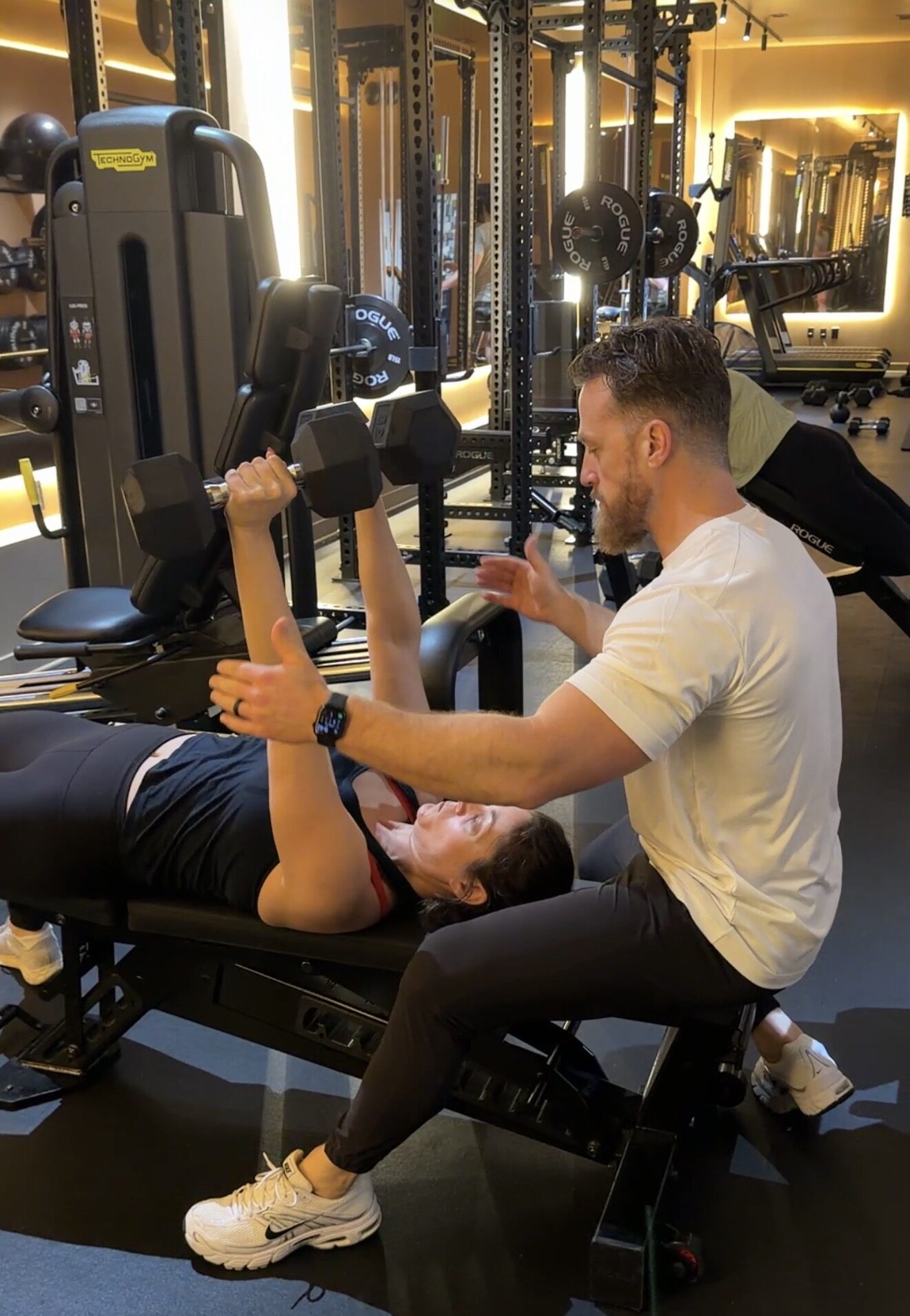
One of the biggest fitness myths? That soreness equals results.
We’ve all been there. You finish a workout feeling great, only to wake up the next morning wondering why you’re not sore. Does that mean you didn’t work hard enough? Should you have lifted heavier or pushed yourself more?
For this month’s Ask a Trainer, we’re breaking down one of the most common workout misconceptions: You need to feel sore after every workout to see results.
The truth? Soreness isn’t necessarily an indicator of an effective workout.
Why Do Muscles Get Sore After Exercise?
That soreness you sometimes experience a day or two after exercising is called Delayed Onset Muscle Soreness (DOMS).
It’s especially common when you’re new to strength training, returning after time off, increasing your training intensity, or introducing unfamiliar movements.
While some soreness is normal, it doesn’t automatically mean your workout was more effective or that you’re building more muscle.
And here’s the important part: You can have an incredibly effective workout without feeling sore afterward.
What Actually Makes a Workout Effective?
Instead of measuring your workout by how sore you feel, focus on something much more important: progress.
Effective strength training is about consistently challenging your muscles in a way that allows them to adapt and become stronger over time.
This is where progressive overload comes in.
Progressive overload means gradually increasing the demands placed on your muscles. That might look like:
- Lifting slightly heavier weights
- Completing more repetitions with good form
- Improving your range of motion
- Developing better control and technique
- Performing the same workout with less difficulty
These are all signs of progress, even if you don’t wake up sore the next morning.
More Sweat Doesn’t Always Mean Better Results Either
Another common misconception? The sweatier and more exhausted you are after a workout, the better it must have been.
While getting your heart rate up can be beneficial, sweating is primarily your body’s way of regulating temperature—not a measure of how much muscle you’re building or how effective your workout was.
A well-designed full-body strength training program doesn’t need to leave you completely exhausted every time to deliver results.
In fact, constantly pushing yourself to the limit without allowing for adequate recovery can interfere with your ability to train consistently.
Consistency Beats Intensity
One of the biggest mistakes people make when starting a fitness program is believing every workout needs to be harder than the last.
But building strength, improving body composition, and supporting long-term health aren’t about crushing yourself during every session.
They’re about showing up consistently, following a structured program, challenging yourself appropriately, and allowing your body time to recover.
That’s why working with an experienced personal trainer can make such a difference.
A knowledgeable coach can help you understand when to push, when to adjust, and how to measure progress beyond soreness or the number of calories burned.
The PFLA Takeaway
At Perfect Form LA, we believe effective training should be challenging, intentional, and sustainable.
Our semi-private strength training and 1:1 personal training in Studio City, Los Angeles focus on individualized programming, proper technique, progressive overload, and helping clients build strength that lasts.
Whether you’re new to strength training or have been working out for years, our goal isn’t to leave you exhausted after every session. It’s to help you get stronger, move better, and continue making progress over time.
So the next time you wake up without sore muscles after a workout, don’t question whether it worked. Ask yourself whether you’re getting stronger.
Because soreness fades. Strength is something you build.
Have a fitness question you’d like answered? Send it our way for an upcoming Ask a Trainer!